Investigating Pedigree Influences on Adaptability to Varied Course Configurations in English Flat Racing
Written by Blake Frank · Aug 26, 2026
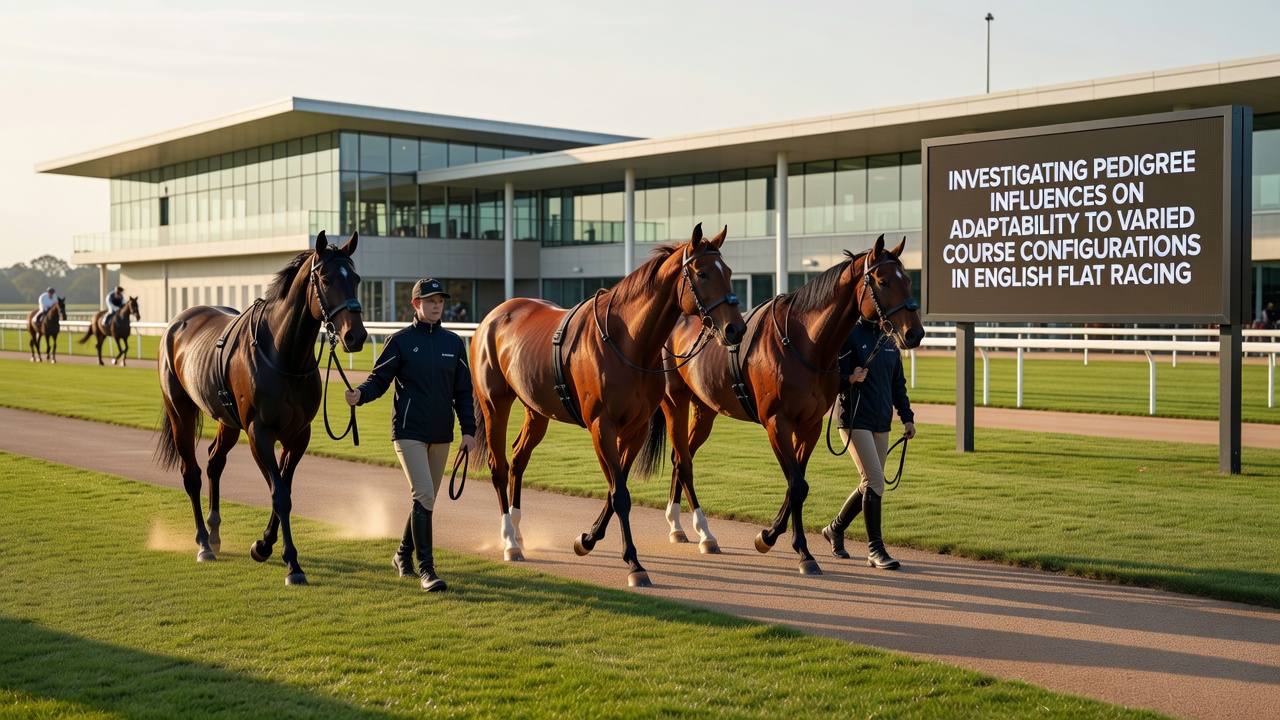
Investigating Pedigree Influences on Adaptability to Varied Course Configurations in English Flat Racing
English flat racing features a range of course configurations that include left-handed and right-handed tracks, differing undulations, and varying lengths of straight sections, all of which place specific demands on equine physiology and psychology. Researchers have examined how bloodlines contribute to a horse's capacity to adjust performance across these setups, drawing on performance records maintained by the British Horseracing Authority and supplementary genetic datasets.
Course Configurations and Their Demands
Tracks such as Newmarket's Rowley Mile present long straights with minimal turns, while Epsom Downs incorporates sharp camber changes and a pronounced downhill section into the home straight. Ascot and York add further variables through their respective left-handed and right-handed orientations combined with gradual elevation shifts. Data compiled over multiple seasons shows that horses with certain sire lines record higher win percentages when returning to tracks that share similar geometric features, suggesting a heritable component in stride adjustment and balance recovery.
Analyses of race outcomes from 2018 through 2025 indicate that progeny of stallions who themselves competed successfully on undulating courses tend to maintain better finishing speeds on those surfaces. Conversely, lines developed primarily on flat, galloping tracks often display reduced efficiency when asked to negotiate tighter bends or pronounced cambers, although individual training regimens can modify these patterns to some degree.
Pedigree Data Collection and Analytical Methods
Investigators compile extended pedigrees through Weatherbys records, cross-referencing five-generation ancestry with detailed racecourse descriptors supplied by official handicappers. Statistical models incorporate variables such as average winning distance, sectional timing splits, and ground condition preferences to isolate pedigree effects from environmental influences. One study published in the Equine Veterinary Journal applied multivariate regression to over 12,000 runners and identified statistically significant correlations between mitochondrial DNA markers inherited from dams and adaptability scores on right-handed circuits.
Additional work conducted by teams at the University of Bristol has incorporated GPS-derived stride length data collected during training gallops, allowing direct comparison of biomechanical responses across simulated course profiles. These datasets reveal that certain branches of the Sadler's Wells male line consistently produce offspring whose stride frequency adjusts more rapidly when transitioning between left-handed and right-handed configurations.

Observed Patterns Across Major Fixtures
Performance trends at Goodwood, with its undulating left-handed loop, differ measurably from those recorded at Doncaster's flatter right-handed layout. Progeny of Danehill Dancer appear more frequently among the placed horses at Goodwood, whereas descendants of Galileo show stronger aggregate figures at Doncaster. Such distributions persist after controlling for trainer, jockey, and declared ground conditions, pointing toward a pedigree-linked aptitude rather than coincidental results.
Researchers tracking runners in August meetings have noted that horses whose dams won on similarly configured tracks often post improved speed figures during the later part of the season. August 2026 schedules will include several high-profile contests at venues featuring mixed configurations, providing fresh data points for ongoing longitudinal studies.
Genetic Markers and Future Research Directions
Whole-genome sequencing projects undertaken in collaboration with the Irish Equine Centre have begun to pinpoint regions on equine chromosome 19 that associate with superior proprioception during directional changes. While these findings remain preliminary, they align with earlier observations that certain sire lines transmit superior recovery times after negotiating downhill gradients. Industry bodies such as the Thoroughbred Breeders' Association continue to fund projects that integrate genomic information with detailed course-mapping technology.
International comparisons drawn from Australian Racing Board datasets and European studies further support the notion that pedigree effects on adaptability are not confined to British racing but manifest across jurisdictions with comparable track diversity. Continued accumulation of sectional data from timing providers will allow refinement of predictive models used by breeders and owners when selecting matings aimed at producing versatile performers.
Conclusion
Evidence accumulated to date demonstrates that pedigree exerts measurable influence on how horses adapt to the specific geometric and topographic features of English flat racing courses. Ongoing integration of genetic analysis with detailed performance metrics promises to sharpen breeding decisions and training strategies, ultimately contributing to more consistent results across the varied configurations that define the sport.