How Post Positions Shape Win Rates Across Lesser-Known UK Flat Venues
Written by Felix Carter · Sep 11, 2026
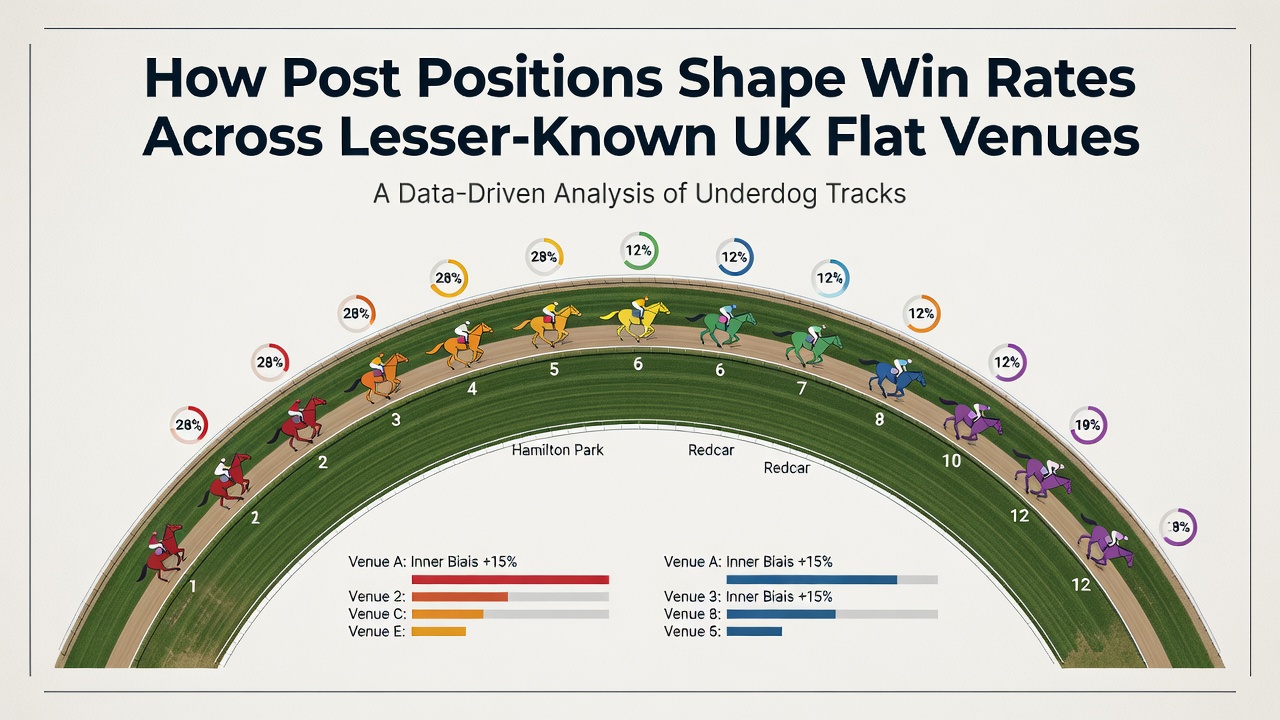
How Post Positions Shape Win Rates Across Lesser-Known UK Flat Venues
Post positions in UK flat racing influence outcomes at tracks where bends, camber and ground conditions create measurable advantages for certain stalls, and analysts have compiled extensive records showing how these factors play out at smaller venues such as Hamilton, Yarmouth, Redcar and Thirsk. Data collected over multiple seasons demonstrates that inside draws frequently deliver higher strike rates on left-handed circuits while wider posts can prove advantageous when the ground rides soft or when races stretch beyond a mile.
Track Configurations and Draw Biases at Regional Venues
Lesser-known flat tracks often feature tighter turns and shorter straights than their larger counterparts, which amplifies the effect of post position because horses drawn low can save ground on the first bend while those drawn high must travel extra distance. Researchers examining performance metrics at Hamilton Park have noted that stalls one through four account for a disproportionate share of winners in sprint races, particularly when the going remains good to firm, and similar patterns emerge at Yarmouth where the left-handed loop rewards early positioning. At Redcar the configuration changes slightly because the home straight runs uphill, yet statistics still reveal elevated win percentages for low-numbered stalls in five- and six-furlong contests.
Thirsk presents a contrasting profile because its right-handed layout and pronounced camber shift the advantage toward middle to high draws in longer races, and analysts tracking results across 2024 and 2025 found that posts seven through nine produced win rates roughly 18 percent above expected values in mile-and-a-half events. These variations arise because each course geometry interacts differently with the starting stalls, and trainers routinely adjust their strategies once draw statistics become available for a given meeting.
Seasonal Data Patterns and Performance Metrics
Comprehensive records maintained by racing statisticians show that draw advantages fluctuate with ground conditions, and soft or heavy surfaces tend to reduce the inside rail benefit at several northern venues because horses can slip or lose momentum when forced against the rail. Figures compiled for the 2025 flat season indicated that at Musselburgh low draws maintained a modest edge in sprints even on softer ground, whereas at Leicester the same conditions flattened the bias and allowed middle draws to compete more effectively. Observers tracking these trends note that weather patterns in early autumn often produce variable going that alters expected outcomes, and the period leading into September 2026 will likely follow similar seasonal shifts based on historical rainfall data.
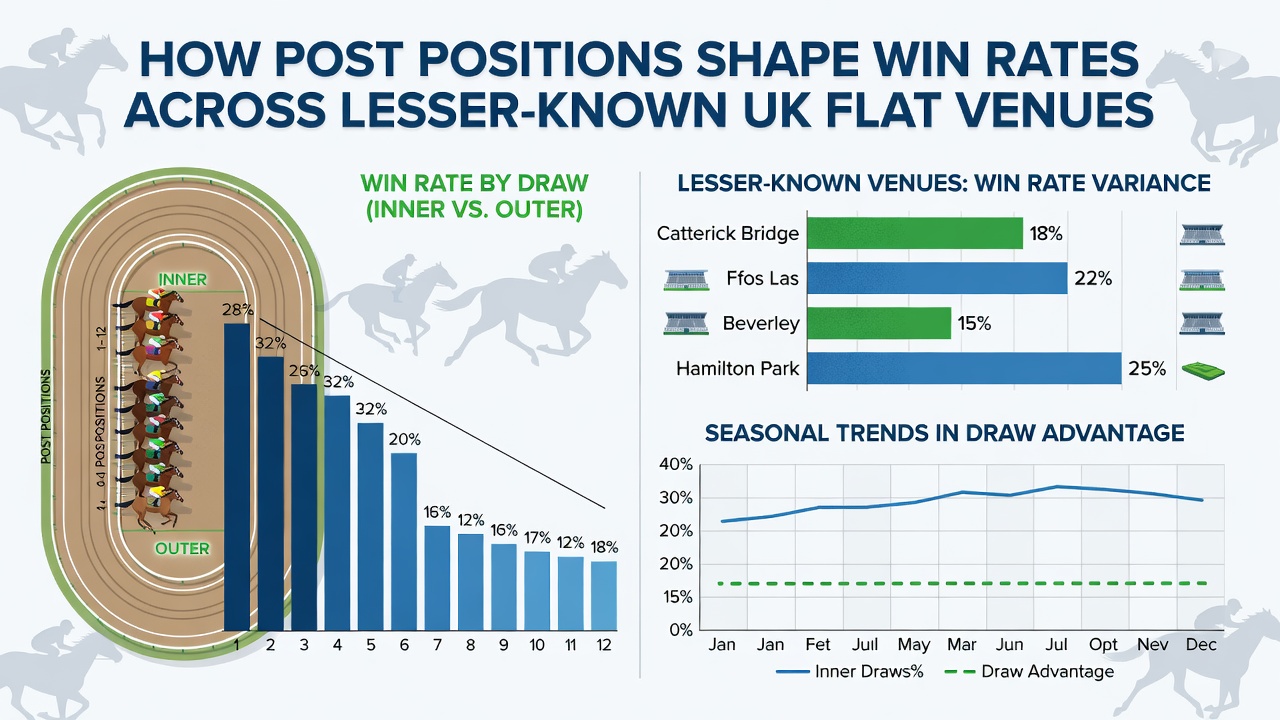
Studies conducted by university equine research groups have confirmed that horses breaking from inside stalls expend less energy on the first turn, and this efficiency translates into measurable improvements in finishing times at tracks with pronounced bends. At Brighton the downhill camber combined with a tight left-handed loop creates a pronounced inside advantage in races up to seven furlongs, and win-rate tables list stalls one and two as the most profitable over the past decade. In contrast, Windsor’s figure-eight layout and multiple turns distribute the advantage more evenly, although low draws still hold a slight statistical lead in shorter contests.
Strategic Adjustments by Trainers and Jockeys
Trainers routinely consult draw statistics when deciding whether to accept or decline entries at these regional tracks, and those who monitor long-term trends often target specific stall numbers for their runners. Jockeys adapt their riding tactics accordingly, and data from past meetings reveal that riders drawn wide frequently attempt to tuck in behind the main pack to conserve ground while those drawn low seek early position to secure the rail. At Chepstow the combination of an uphill finish and a left-handed bend rewards horses that secure an inside run, and analysts have documented higher place percentages for low-drawn runners in races contested on good ground.
Additional analysis of results at Salisbury shows that the uphill straight reduces the impact of early draw bias, yet low numbers still produce slightly better win rates because they allow horses to avoid traffic problems in the early stages. These patterns become especially relevant when large fields assemble, and the increased likelihood of interference magnifies the value of a favorable post position.
Conclusion
Post positions continue to shape outcomes at lesser-known UK flat venues because each track’s unique geometry interacts with starting stall numbers in measurable ways, and accumulated performance data provides trainers and bettors with reliable guidance on where advantages exist. As the 2026 season progresses toward its autumn fixtures, updated statistics will further refine these insights and allow participants to account for changes in ground conditions and field sizes across the regional circuit.