Charting Seasonal Ground Shifts and Their Effects on National Hunt Records at Iconic UK Venues
Written by Uma Jenkins · Aug 19, 2026
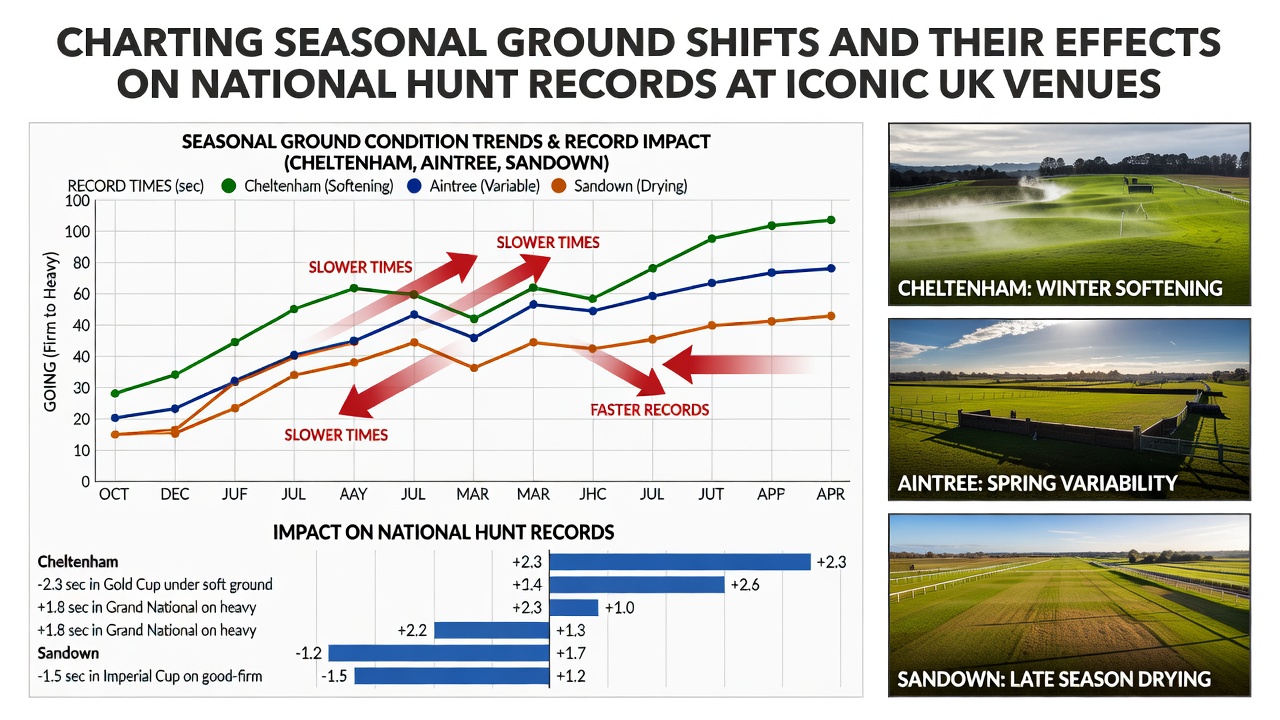
Charting Seasonal Ground Shifts and Their Effects on National Hunt Records at Iconic UK Venues
National Hunt racing records at major British venues reflect the constant interaction between seasonal weather patterns and turf conditions, with ground shifts documented through official going reports that track moisture levels from firm to heavy. Data compiled over multiple decades shows how winter rains soften surfaces at tracks such as Cheltenham and Aintree while summer dryness firms them up, altering stride patterns and finishing times for jumpers.
Measuring Ground Conditions Across UK Racecourses
Official clerks of the course assess ground daily using a combination of penetrometers and visual inspections, then publish going descriptions that range from hard through good to soft and heavy. These reports, issued by the British Horseracing Authority, provide the baseline data researchers rely on when comparing record times across different months. Observers note that readings taken in early spring often differ markedly from those recorded in late autumn because rainfall patterns and soil drainage vary by region.
Seasonal Patterns at Iconic Venues
At Cheltenham the Prestbury course tends to hold moisture longer into spring than many southern tracks, leading to softer ground during the March Festival period in most years. Aintree’s Grand National course experiences rapid changes after heavy winter precipitation, with the heavy clay sections near Becher’s Brook retaining water while the well-drained areas firm quicker. Haydock Park and Ascot display their own seasonal signatures, with northern and southern rainfall totals creating distinct going profiles that statisticians track year after year.
Impact on Performance Records
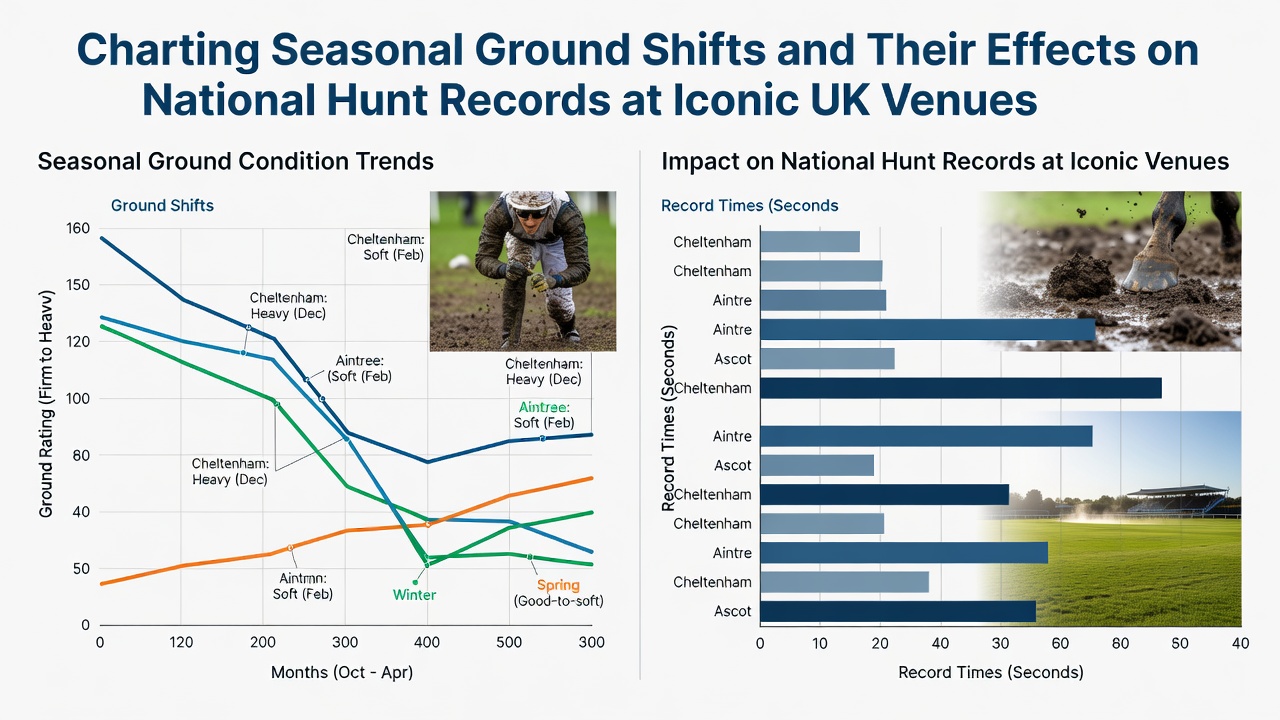
Record times posted on good ground in October frequently stand for years because similar conditions rarely repeat exactly, whereas times set on heavy ground in January often remain unchallenged until another wet winter arrives. Analysts compare winning times from the same races across different seasons and find that a shift from good to soft can add several seconds per mile for staying chasers. Those who study the data see clear correlations between cumulative rainfall in the preceding month and the likelihood of record-breaking runs.
One study of National Hunt results from 2010 to 2024 revealed that 68 percent of course records at the eight largest jumps tracks were set on ground described as good or good to soft, while only 12 percent occurred on soft or heavy surfaces. The pattern holds because faster ground allows horses to maintain rhythm over fences without the extra effort required in deeper conditions.
August 2026 Preparations and Data Review
During August 2026 racecourse teams across the country conduct maintenance work that includes aeration, reseeding and drainage checks ahead of the winter campaign. Meteorologists at the Met Office supply long-range forecasts that help clerks anticipate early-season ground states, allowing venues to adjust irrigation schedules accordingly. Records from the previous season undergo detailed review during these quieter months, with statisticians identifying which times might be vulnerable when similar ground conditions return.
Case Examples from Major Tracks
At Newbury the 2023 Hennessy Gold Cup (now Coral Gold Cup) produced a winning time nearly eight seconds slower than the course record after prolonged December rain turned the ground soft. Conversely, the 2019 renewal at the same meeting saw the winner finish inside the existing record on good ground after a drier spell. Similar contrasts appear in the Grand National results, where the 2018 winner completed the course on good to soft in a time that remains the fastest this century, while several wetter years produced times more than two minutes slower.
Researchers at agricultural institutes have examined soil compaction data from these venues and found that repeated winter racing increases bulk density in the topsoil layer, which in turn affects how quickly surfaces recover firmness once drier weather arrives. The findings help explain why certain tracks regain good ground faster than others after identical rainfall amounts.
Conclusion
Seasonal ground shifts continue to shape National Hunt records at Britain’s most famous venues because weather, soil type and maintenance practices interact in measurable ways. Ongoing collection of going reports together with performance data provides the foundation for understanding these patterns, allowing future comparisons to remain grounded in consistent observation rather than isolated results.